
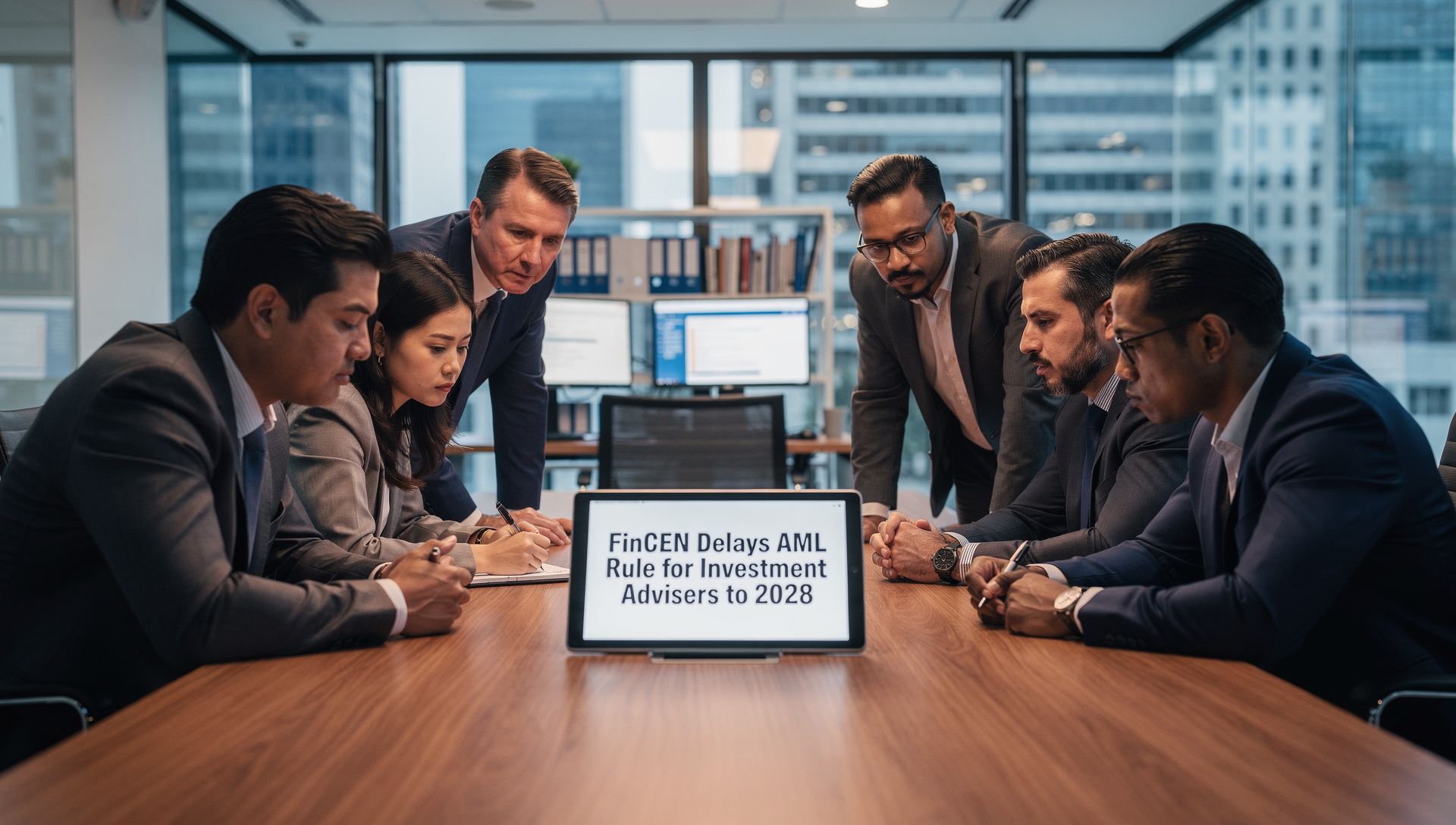
Investment managers thought January 1, 2026 would be the start of a major change: AML program and SAR filing obligations becoming mandatory for Registered Investment Advisers (RIAs) and Exempt Reporting Advisers (ERAs).
But in a major update, FinCEN issued a final rule pushing the effective date to January 1, 2028.
This isn’t just a timeline change it affects how investment firms, fund administrators, and banking counterparties will handle KYC/AML in 2026–27.
Let’s break it down.
1) What Happened The Regulatory Update
FinCEN (U.S. Treasury) issued a final rule extending the effective date of the investment adviser AML rule from Jan 1, 2026 → Jan 1, 2028.
So for now:
- RIAs/ERAs are not yet required under this rule to implement a formal AML/CFT program and file SARs like banks.
2) Why FinCEN Delayed It (What Regulators Are Signalling)
FinCEN has stated it intends to revisit the scope of the IA AML Rule.
In plain terms:
The rule is not scrapped. It is being re-examined and potentially reshaped
This is often what happens before:
- tighter definitions
- clearer expectations
- more explicit enforcement posture
3) Why This Matters for Asset Managers (Even If They’re “Not in Scope Yet”)
Many investment firms will interpret the delay as:
“Great AML is not our problem until 2028.”
That’s risky thinking.
Because the market expectation hasn’t paused:
- fund administrators still demand inbound KYC
- custodian banks and prime brokers still require enhanced transparency
- allocators still want AML governance comfort
The delay changes regulatory timing, but not reputational expectation.
4) What Compliance Teams Should Do in 2026 (Practical Actions)
If you’re in PE / VC / hedge funds / IMs, treat this as a preparation window, not a break.
A) Build a “shadow AML program”
Even without full legal obligation, start implementing:
- AML governance owner
- sanctions and PEP screening
- adverse media program
- investor risk categorisation
- escalation SOPs
- evidence retention (audit trail)
B) Strengthen investor onboarding & EDD playbooks
Especially for:
- offshore feeders
- nominee structures
- family offices
- politically exposed investors
- high-risk jurisdictions
C) Prepare SAR readiness (even if you can’t file yet)
Train teams on:
- what suspicious activity looks like in funds
- how to document suspicion
- who should escalate internally
- how to preserve evidence
D) Fix “inbound KYC chaos”
Most asset managers struggle with repeated KYC requests. Use this time to build:
- Master KYC pack
- Corporate documents library
- ownership charts
- regulatory proof folder
- standard response template
5) The Bigger Message: Funds Are No Longer “Low AML Priority”
Even with delay, this is the clear direction:
Investment management is being pulled into the AML perimeter.
Why? Because funds can be used for:
- layering
- integration
- sanctions evasion
- corruption proceeds
- nominee capital placement
Regulators don’t want funds to remain the “quiet backdoor” of financial crime.
6) Bottom Line
FinCEN’s 2028 delay gives the industry two extra years.
But the smart compliance takeaway is:
2026–27 is your runway to implement AML properly — before it becomes enforced.
Because once 2028 arrives, regulators won’t accept “we’re new to this” as an excuse.